
Working alone can be part of everyday life for thousands of employees. A security officer completing a night patrol, a facilities professional attending an empty property, a housing officer visiting a resident, or an engineer working at an isolated site may all face situations where help is not immediately within reach.
In these moments, raising an alarm is only the first step.
An SOS alert can notify a monitoring team that something has gone wrong. But what happens next can be just as important. Can the worker explain what is happening? Can the monitoring team hear them? Can they provide reassurance while assistance is arranged?
This is where two-way communication for lone worker safety becomes critical.
Emergencies are rarely predictable. A lone worker may experience a medical issue, encounter an aggressive individual, suffer an accident, or suddenly feel unsafe.
During these situations, communicating clearly can be difficult. A worker may only have a few seconds to trigger an SOS alert, particularly if they are under threat.
With two-way communication, an alert can become the beginning of a conversation rather than the end of the process.
A monitoring professional can attempt to establish contact, understand the circumstances and determine what level of response is required. The worker, meanwhile, knows that someone is listening and that their situation is being actively managed.
An SOS notification can identify that an emergency has been triggered. However, an alert alone may not explain why.
Is the worker injured? Are they being threatened? Have they witnessed an incident? Are they unable to move? Is someone else involved?
These details can significantly influence the appropriate response.
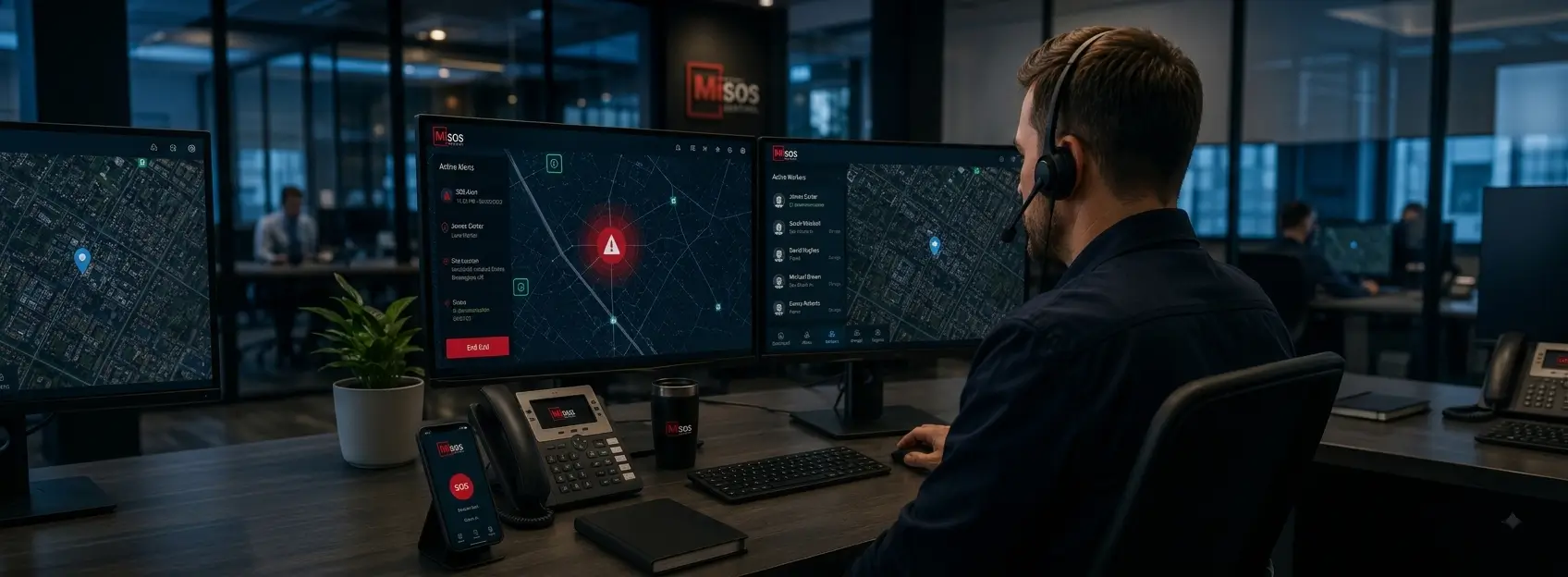
Two-way communication helps provide the missing context. Combined with GPS location, worker identity and real-time monitoring, it can give response teams a much clearer picture of the situation.
Lone worker protection is not only about technology. It is also about people.
In a stressful situation, hearing a calm voice can make a significant difference. Knowing that someone has received the alert, understands where the worker is and is taking action can help reduce panic and encourage the worker to remain focused.
This human connection is particularly valuable when the worker is isolated and cannot see immediate assistance.
Effective lone worker protection should connect the employee, technology and response team.
Solutions such as MiSentinelSOS are designed to support this approach by combining emergency alerts with features such as GPS location, two-way communication, welfare checks and other safety mechanisms.
The objective is not simply to generate an alarm. It is to help create a clear chain of communication from the person at risk to the people responsible for their safety.
Employees should not have to choose between doing their job and feeling safe while doing it.
Organisations have a responsibility to understand the risks faced by lone workers and provide appropriate measures to support them. For employees, knowing that they can quickly raise an alert and communicate with a monitoring team can provide an additional layer of confidence.
Ultimately, lone worker safety is about more than responding to emergencies. It is about ensuring that people are not truly alone when something goes wrong.
With the right combination of technology, monitoring and human communication, organisations can move from simply detecting an emergency to understanding it, responding to it and supporting the person involved.
MiSentinelSOS – connecting lone workers to the support they need, when it matters most.