

Most organisations with lone workers have a policy that reads well. Risk assessments are filed. A safety induction covers the basics. Somewhere there’s a line about “employees must follow the buddy system” or “check in with your manager at the end of each visit.” On paper, duty of care looks handled.
Then a home care worker is alone in a client’s flat at 9pm, an estate agent is showing an empty property to a stranger, a utilities engineer is on a rural site with no phone signal, and the policy document isn’t in the room with them. What’s actually protecting that person in that moment is not the policy. It’s whatever system, habit, or piece of technology is genuinely watching their back — and for a large number of organisations, when you look closely, the honest answer is: not much.
The obligation is real, and it’s not new
In the UK, the duty to protect lone workers isn’t a best-practice suggestion — it sits within the Management of Health and Safety at Work Regulations 1999, which require employers to assess and manage risks specifically arising from someone working alone. The Health and Safety Executive have published guidance on lone working for years precisely because the risk is well understood, not because it’s a new or fashionable concern.
What’s changed is the range of roles this now applies to. Lone working used to conjure a fairly narrow image — night security, perhaps. The reality today is far broader: community nurses and care workers doing home visits, engineers and surveyors on isolated sites, retail staff opening or closing alone, estate agents conducting solo viewings, delivery drivers, cleaners in empty buildings after hours. Most organisations have more lone workers than they’d instinctively guess, because the category has quietly expanded while a lot of safety thinking hasn’t kept pace.
Why “check in when you can” isn’t enough
The most common lone worker safety process is some version of a scheduled check-in — call in at set times, or when a visit starts and ends. It’s better than nothing, but it has a structural weakness worth naming plainly: it depends entirely on the worker being physically and mentally able to make that call.
In the moments that actually justify a duty-of-care obligation — a fall, an assault, a medical emergency, an aggressive client — the person is often precisely the one least able to pick up a phone and check in. A missed check-in is a signal that something might be wrong, discovered only after the fact. It isn’t protection in the moment. It’s a delayed alarm, and the delay is exactly where the risk lives.
The cost nobody puts in the risk register
There’s a version of this conversation that stays purely operational — response times, incident logs, insurance. That’s important, but it understates what’s really at stake. Ask people who do genuinely isolated work how they feel about it, and a theme comes up again and again: it isn’t only the risk of a serious incident that affects them, it’s the low background hum of feeling unwatched. A care worker who quietly dreads a specific client’s flat. An engineer who mentally notes “if something happens here, how long before anyone even realises.”
That kind of chronic, low-grade unease has a real cost — to wellbeing, to retention, to whether people stay in roles that are already hard to recruit for. Organisations that take lone worker safety seriously tend to notice this indirectly: fewer people quietly avoiding certain shifts or locations, less unexplained turnover in roles that involve solitary work. Safety, done well, isn’t only about preventing worst-case incidents. It changes how people feel about doing the job at all.
What genuine duty of care looks like in practice
A few markers tend to separate organisations that have actually operationalised lone worker safety from those that have merely documented it:
Protection doesn’t depend on the worker’s ability to act. If the entire system relies on someone consciously checking in or pressing a button, it fails precisely when the risk is highest. Detection that works passively — recognising a fall, a lack of movement, an unusual pattern — closes the gap that scheduled check-ins can’t.
Escalation is fast and genuinely reaches a person. An alert that goes to an inbox or a dashboard nobody’s watching in real time isn’t protection, it’s documentation. The measure that matters is how quickly a real human becomes aware and can act.
It works where signal doesn’t. A policy that assumes reliable phone coverage falls apart in exactly the rural, basement, or remote locations where lone working risk is often highest.
It’s visible to the worker, not just to management. Safety measures that exist purely as a compliance record, invisible to the person actually doing the work, don’t change how safe someone feels doing their job. The people relying on it should know, concretely, what happens if something goes wrong.
Where this leaves the conversation
None of this is about fear-mongering a risk that doesn’t exist — most shifts, most visits, most solo jobs end exactly as uneventfully as they should. But duty of care isn’t judged by the average day. It’s judged by what was actually in place on the one day it wasn’t uneventful, and whether that was a genuine safeguard or a document nobody had read since induction.
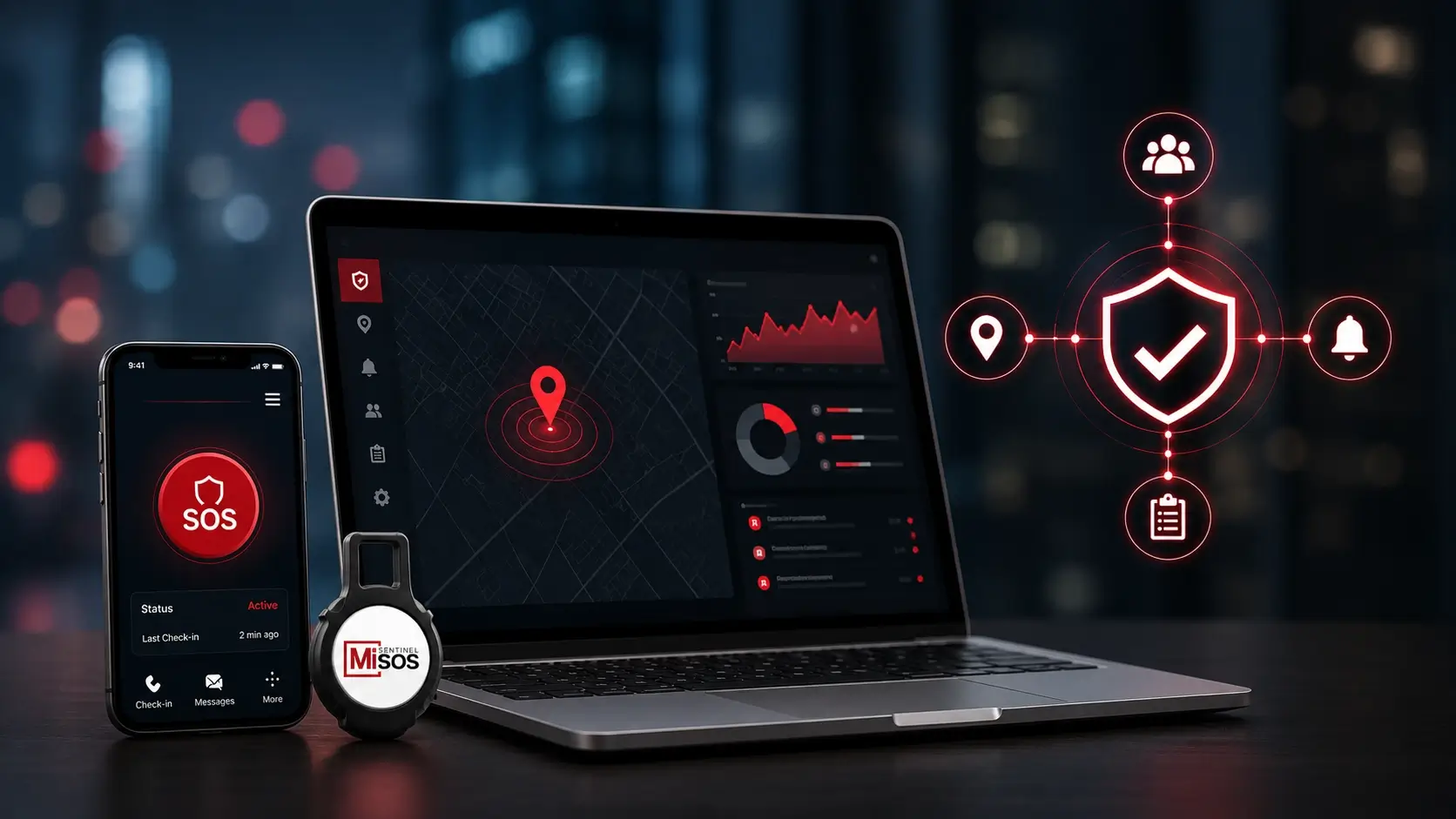
This is the gap MiSentinelSOS is built to close for organisations that manage lone workers — moving protection away from something that depends on the worker remembering to check in, toward detection and escalation that work whether or not they can.
If you manage people who work alone, the honest question worth sitting with isn’t “do we have a lone worker policy.” Almost everyone does. It’s: if something happened to one of them today, at the specific moment it happened, what would actually notice — and how long would it take?